The Drumstick Tree: A Short History of Moringa
Moringa has been useful to people for a very long time, and the reasons have less to do with wellness marketing than with agriculture.
Where it comes from
Moringa oleifera is native to the foothills of the Himalayas in northwestern India. It is now cultivated across South Asia, Southeast Asia, Africa, the Caribbean and Central America — anywhere warm enough and dry enough to suit it.
Why it spread so widely
Not because of any wellness claim. Moringa spread because it is extraordinarily practical as a crop.
It grows fast, reaching several metres in a single season. It tolerates drought and poor soil that would defeat most vegetables. It produces edible leaves nearly year-round, including through dry seasons when little else is available. And almost every part of it has a use — leaves and pods as food, seeds pressed for oil, and seed cake historically used to help clarify water.
The names
Drumstick tree comes from the long, ridged seed pods, which are a common vegetable in South Indian cooking. Horseradish tree refers to the sharp flavour of the root. Miracle tree is more recent and more promotional, though it reflects genuine agricultural usefulness rather than pure invention.
How the leaves are traditionally eaten
As food, straightforwardly. Fresh leaves cooked into stews and curries. Dried leaves powdered and stirred into porridge or soup. Leaves brewed as tea.
That long history of ordinary consumption is the single most reassuring thing about moringa leaf. Its safety record does not rest on supplement trials — it rests on the fact that a great many people have eaten it as a vegetable for a very long time.
The parts are not interchangeable
Worth knowing when you read general information about moringa. Leaf, pod, seed, root and bark have different profiles and different traditional cautions. Root and bark are treated with considerably more care.
Supplements using leaf, as ours does, sit on the best-studied and most commonly eaten part of the plant. Warnings you encounter about moringa root do not automatically apply.
From food crop to supplement
The shift is recent. Research interest picked up meaningfully over the last few decades, focused on the leaf's polyphenol and glucosinolate content, and the supplement market followed.
Most of that research remains early — laboratory work, animal studies, a modest number of small human trials. It is a plant with a genuine and growing literature rather than a settled one, and anyone telling you otherwise is ahead of the evidence.
What has not changed
It is still a leafy green. Nutrient-dense, useful, and best understood as food rather than as medicine — which is roughly how it has been treated for most of its history.
Sources
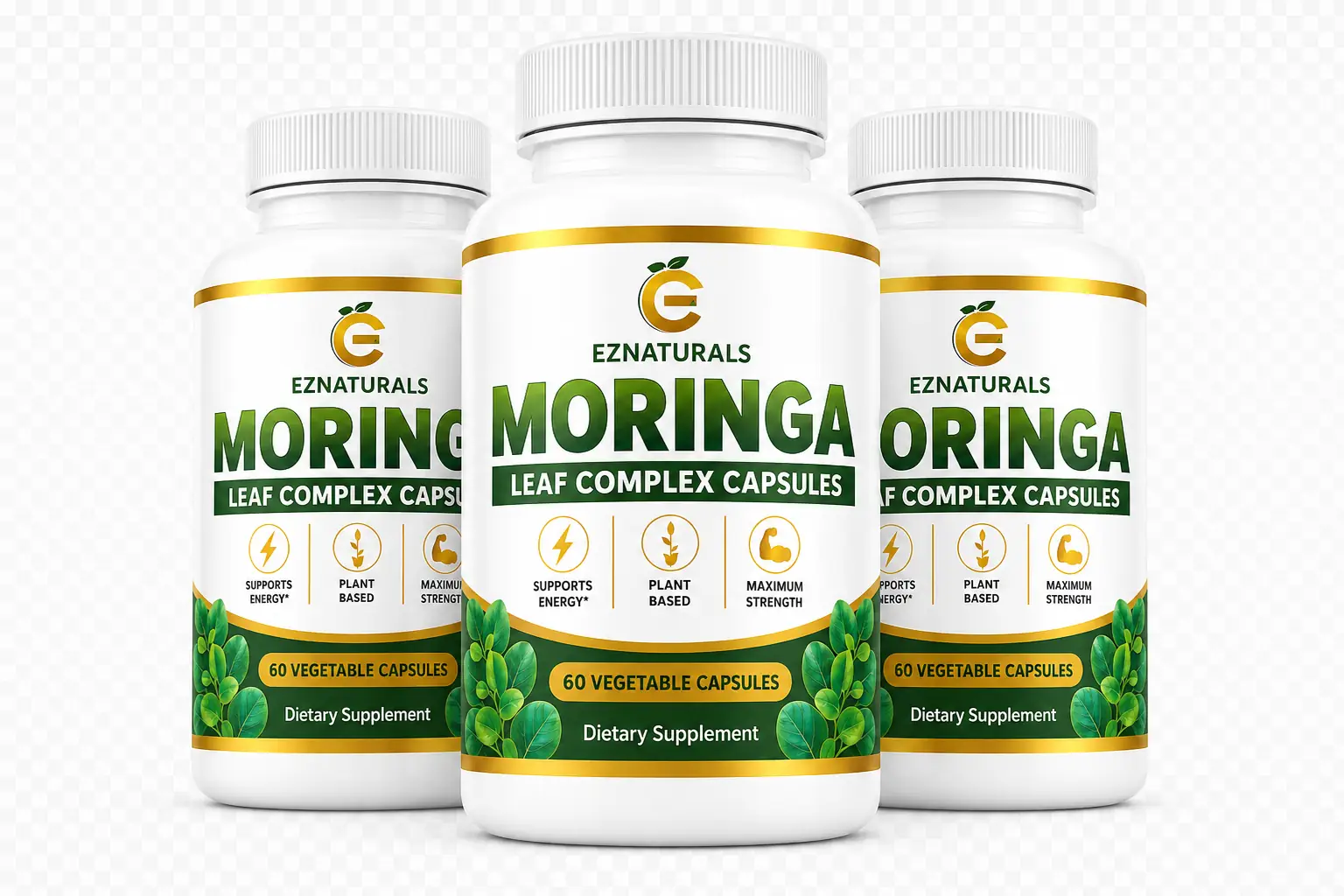
One Leaf. One Capsule. Every Day.
355 mg of moringa leaf per vegetable capsule, 60 capsules per bottle, and a 60-day money-back guarantee behind every order.
Choose Your Supply →